
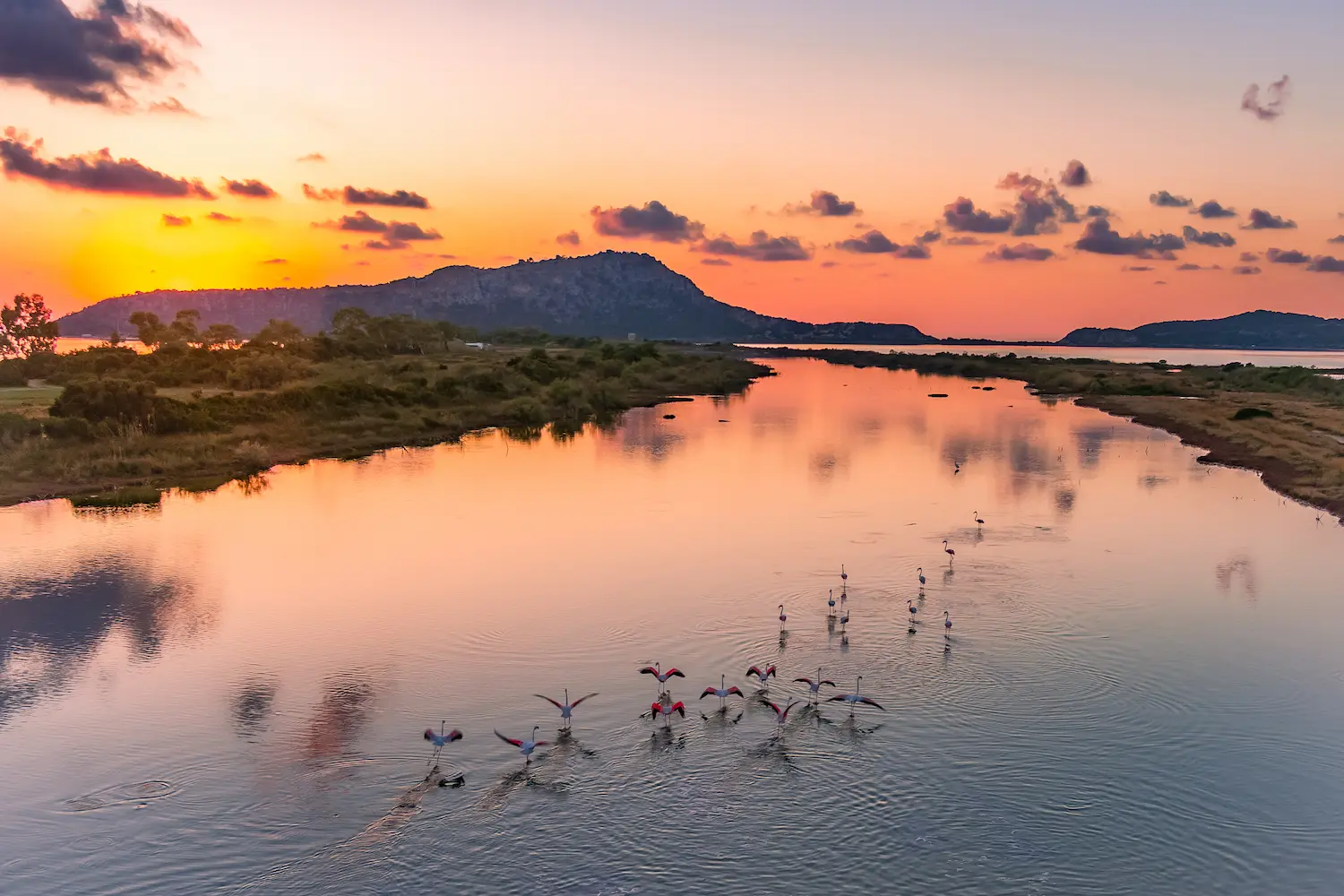
The Gialova Lagoon is not just a lake. It’s the “Home of the Birds” — a protected area (Natura 2000) right next to cosmopolitan Gialova and Voidokilia. In this guide, you’ll discover everything you need to know to visit the Gialova Lagoon like a local.
Here fresh water meets the sea, creating a unique ecosystem for over 250 bird species. If you love nature, tranquility, and photography, this lagoon in Western Messinia is the place you must visit.
📋 In this article:
Wildlife | Hiking | Practical Tips | Access | Cycling | FAQ
What You’ll See (The Wildlife)
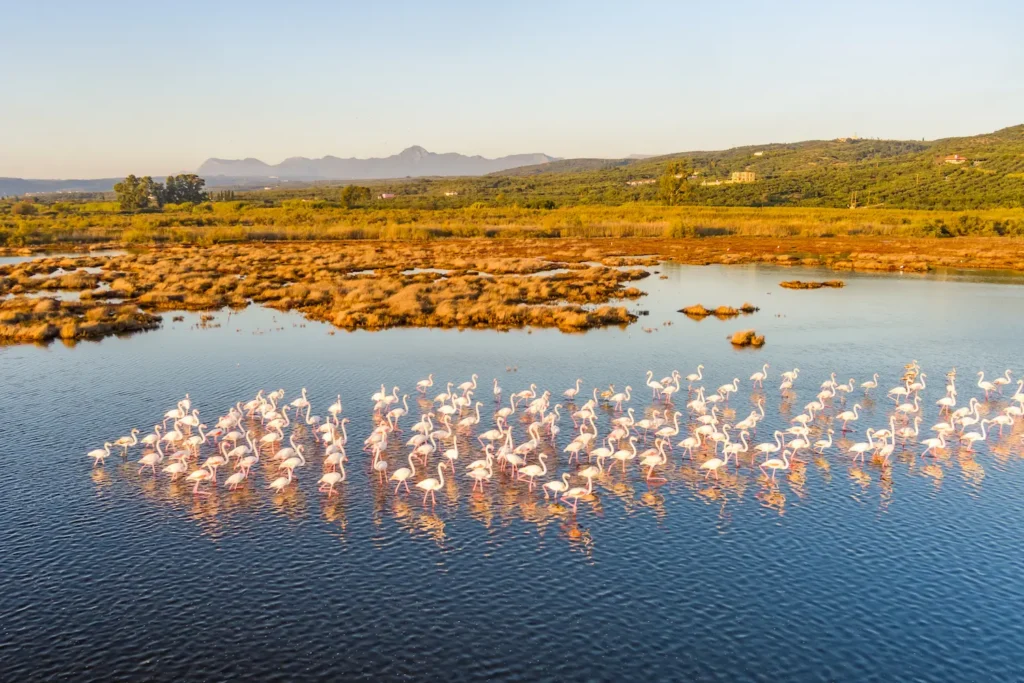
The Gialova Lagoon is a small paradise of biodiversity and one of the most important Pylos nature activities.
- The Birds: Herons, cormorants, ducks, and spoonbills are permanent residents. Ideal for birdwatching.
- The Flamingos: Yes, they exist! If you come in autumn (mainly October), you’ll see flocks of pink flamingos resting in the shallow waters during their migratory journey. It’s a unique sight for photography.
- The African Chameleon: 🤫 Insider Info: Gialova is the only place in Europe where this rare species lives and reproduces. Keep your eyes open in the bushes — you might get lucky!
- Best Time: Autumn (September-November) for flamingos, spring (March-May) for migratory birds.
- What to bring: Binoculars (essential!), camera with zoom, notebook for birdwatching.
The Hike (The Trail)
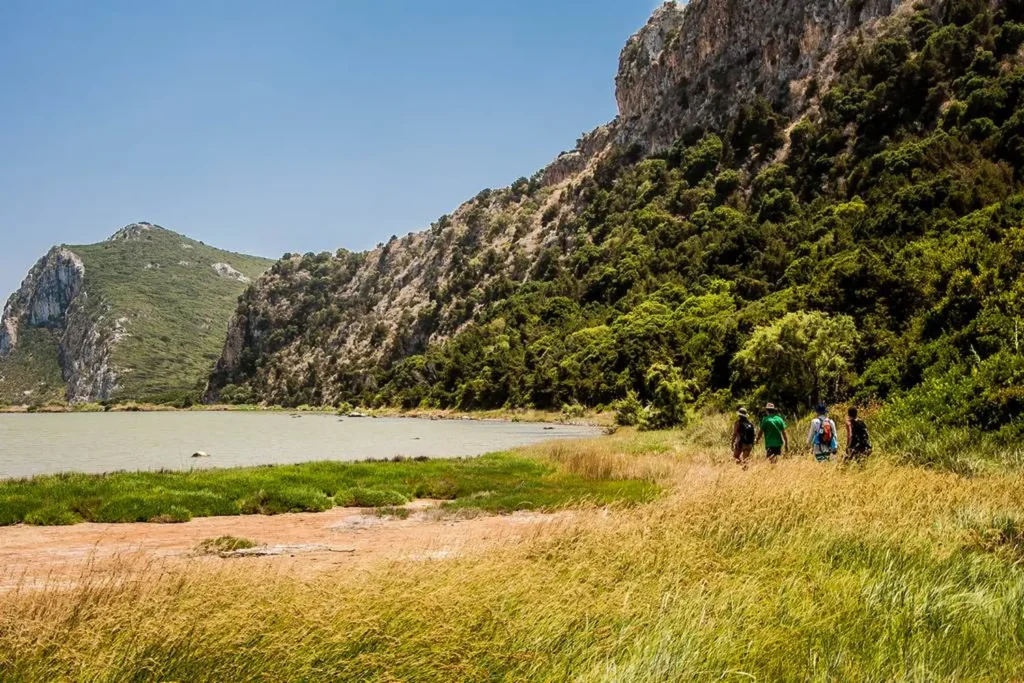
You don’t need to be a mountaineer to enjoy the Gialova Lagoon. The terrain is completely flat and the walk is ideal even for children or people with reduced mobility.
- The Route: There’s a circular trail (about 1.5 hours total, ~3 km) that passes through reeds and sand dunes. It gives you the opportunity to see the rich vegetation up close.
- Our Recommendation: You don’t need to do it all if you’re short on time. Walk to the Bird Observatory (15-20 minutes) to enjoy the view.
- The best time: Late afternoon (17:00-19:00). The sunset paints the lagoon waters red and the heat drops. It’s when the birds are most active and the light is perfect for photos.
- Difficulty: Easy — flat trail, suitable for all ages.
- Access: Parking available at the trail entrance (“Valtos” area).
👉 [ The Circular Route: Paleokastro & Voidokilia]
What to Watch Out For (Must Know)
- Mosquitoes: Don’t go without insect repellent, especially if you stay until dusk. It’s a wetland and mosquitoes are plentiful in summer.
- Water & Hat: There’s almost no shade anywhere. If you go in summer, avoid midday hours (12:00-16:00).
- Quiet: You’re a guest in the birds’ home. Move calmly and without shouting — birds get scared easily.
- Shoes: Wear closed, comfortable shoes — the trail can be muddy after rain.
- Trash: The area is protected (Natura 2000). Take your trash with you — leave nothing behind.
- Photography: Bring a camera with zoom or binoculars with a phone case — birds don’t come very close.
Practical Information & Access
How to get there: Access to the Gialova Lagoon is easy by road. If you’re in Pylos or Gialova, follow the signs to “Divari” beach or to “Valtos” (the most famous spot for observation).
- From Pylos: 10 minutes by car (~5 km)
- From Gialova: 5 minutes by car (~2 km)
- From Kalamata: 45 minutes by car (~45 km)
- Parking: Available at the trail entrance (“Valtos” area) — free.
- Road: The road is dirt in some places but passable for all vehicles.
- Note: The area is not served by public transport. You’ll definitely need your own vehicle to reach the trail entrance. 👉 [Rent a car for your trip] (Affiliate Link)
Extra Tip: Explore by Bike
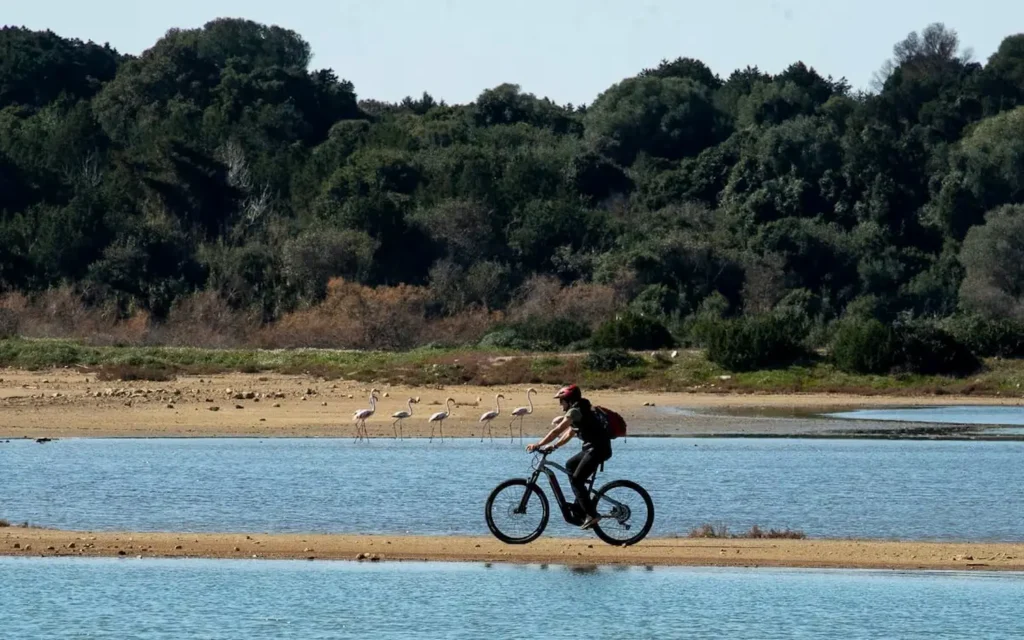
If you prefer cycling to walking, the area around the Gialova Lagoon is ideal — flat, calm, and full of nature.
- The Experience: There are organized Bike Tours with guides who know exactly where the chameleons and rare birds hide.
- Duration: 1-2 hours (flexible)
- Price: €15-€35/person (rental + guide)
- Best Time: Morning (08:00-10:00) or afternoon (17:00-19:00) for better light and less heat.
- 👉 [Book a Bike Tour in Gialova] (Affiliate Link)
👉 [Pylos & Gialova: 7+1 Experiences That Will Elevate Your Trip]
❓ Frequently Asked Questions
- When is the best time to visit Gialova Lagoon? Autumn (September-November) for flamingos, spring (March-May) for migratory birds. Summer is good for morning/afternoon walks.
- Do I need binoculars? Yes, they’re almost essential! Birds don’t come very close and binoculars will help you see them clearly.
- Is it suitable for children? Yes! The trail is flat and short. Children will love seeing the birds and maybe the chameleons.
- Is there an entrance fee? No, access to Gialova Lagoon is free.
- Are there toilets or cafés? No in the trail area. There are cafés and tavernas in Gialova (5′ by car).
- Is it accessible for wheelchair users? Yes, the trail is flat and suitable for wheelchairs, but the access road is dirt — prefer days without rain.
At a Glance (Summary)
| Feature | Information |
|---|---|
| Location | Next to Gialova (“Valtos” area) |
| Designation | Wetland Natura 2000 |
| Entrance | Free |
| Visit Duration | 30 minutes – 1.5 hours |
| Difficulty | Easy (flat trail) |
| Best Time | Autumn for flamingos, afternoon for photography |
| Must Have | Binoculars, insect repellent, closed shoes, water |
| Highlight | Flamingos (October), chameleons, sunset |
Combine Your Visit
If you liked the Gialova Lagoon, also see:
- 👉 The Beaches of Western Messinia
- 👉 Voidokilia Paleokastro Hike
- 👉 Activities in Pylos & Gialova
- 👉 Official Kalamata Tourism Guide
💬 Have you visited Gialova Lagoon? Share your photos or tips in the comments! 👇