
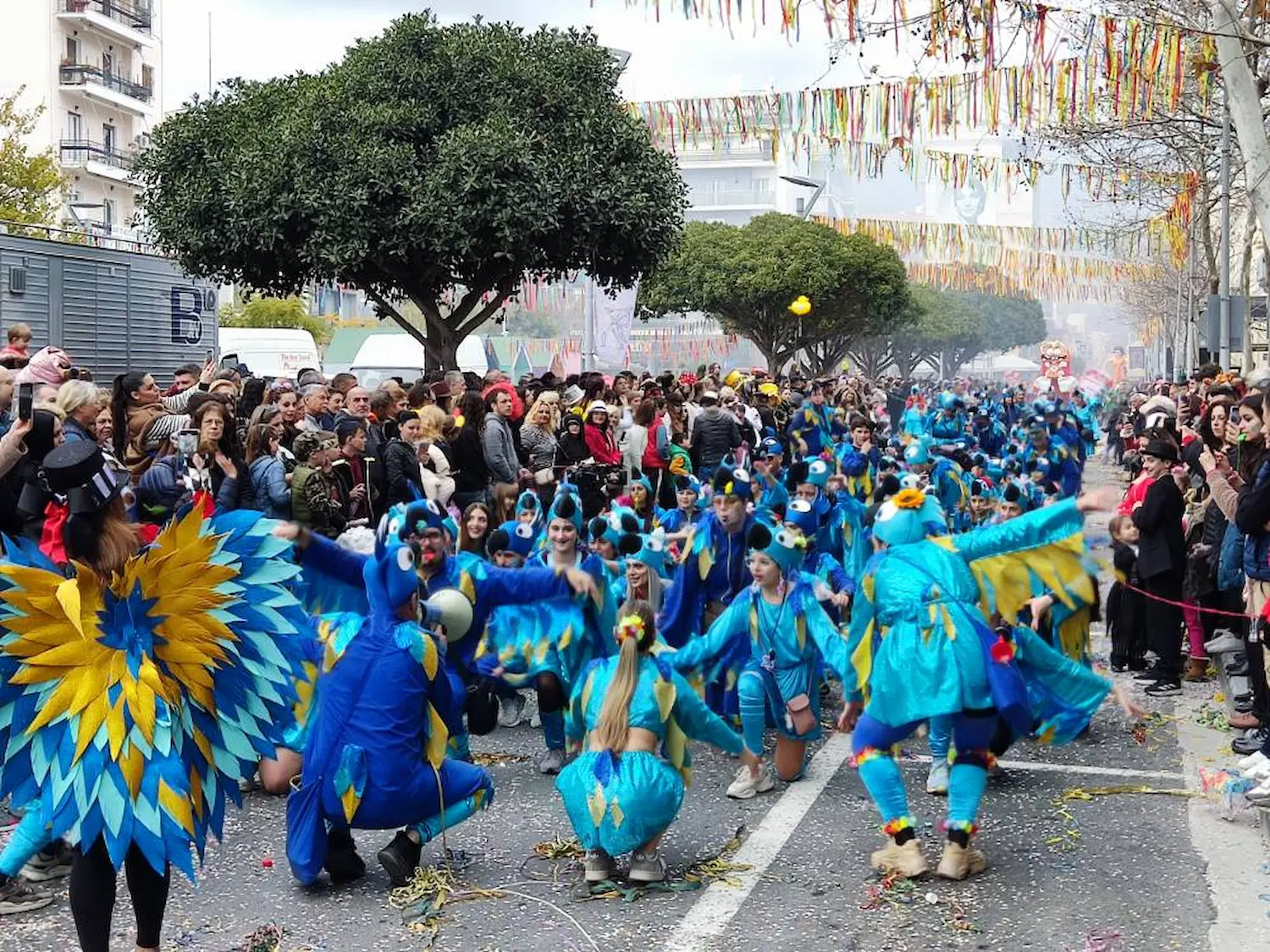
Carnival in Kalamata isn’t just a destination; it’s an experience split in two: the glamour and celebration of the modern city and the wild, Dionysian charm of the villages. In this guide, you’ll discover how to experience the Kalamata carnival like a local — from the city parades to the archaic customs of Taygetos.
If you’re looking for a destination that combines organized fun with raw tradition, you’re in the right place. Follow our guide with dates, schedules, and insider tips for the ultimate Carnival in Kalamata experience.
📋 In this article:
In the City | Dionysian Customs | Nedousa | Magganiako | Gastronomy | Tips | FAQ
In the City: A Square That Never Sleeps
Forget the idea that the Kalamata carnival is only the last Sunday. In Kalamata, the celebration starts weeks before — the ultimate Carnival in Kalamata experience.
- The Central Square (Vasileos Georgiou): It’s “ground zero”. Throughout the Carnival period, the square transforms. Events are set up daily: concerts, contests, games for children, and the traditional “Gaitanaki” (ribbon dance). It’s the space where little ones dress as heroes and adults become children again.
- Night Parade: Perhaps the most atmospheric moment in the city. The carnival crews traverse the center under spotlights and torches, culminating in a massive street party in the Historic Center that lasts until dawn.
- The Grand Parade: The climax on Sunday. Thousands of carnival-goers and impressive floats flood Aristomenous Street in a torrent of music and joy.
- 2026 Dates: Events start 3 weeks before Clean Monday. The Grand Parade: Sunday before Clean Monday.
- Best Time: Arrive at the square 18:00-19:00 to find a good spot for evening events.
- Entry: Free for all city events.
The Alternative Experience: The Dionysian Customs
For those seeking something authentic, archaic, and a bit “dark”, the action moves to the mountains — the most authentic Carnival customs in Kalamata.
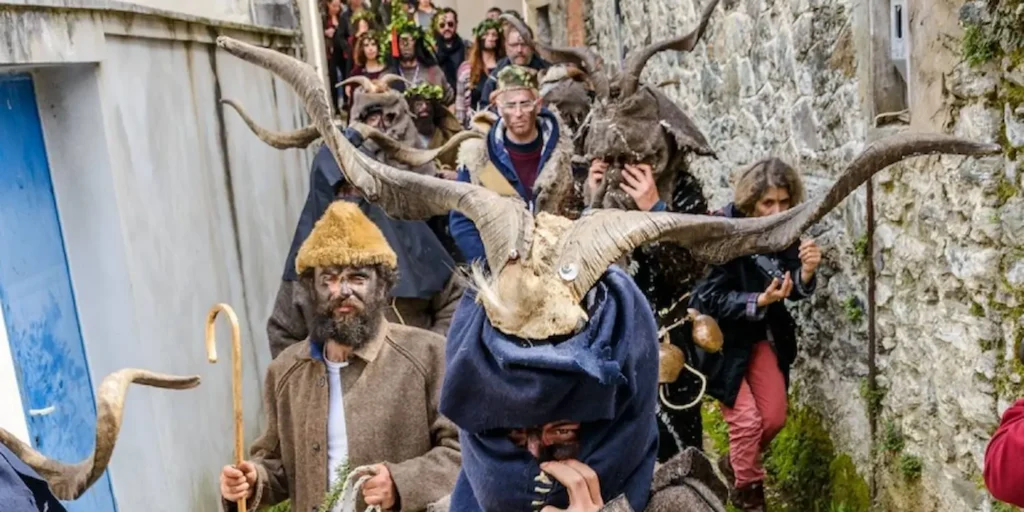
Nedousa (Clean Monday): The Archaic Ritual
- The Custom: Here tradition “bites”. Men dressed as goats, with heavy bells around their waists, traverse the village to “awaken” the earth.
- The Smudging: Smudging faces with soot from the fires is mandatory — it’s the initiation into the ritual.
- The Celebration: Wine, bean soup, and dancing to pipizes and daoulia (traditional instruments) are unstoppable.
- Access: ~45 minutes from Kalamata (~35 km) via mountain road. Car required.
- Best Time: Arrive 10:00-11:00 to see the entire ritual.
- Tip: Wear old clothes — you’ll get dirty with soot and dirt!
- 👉 One Day in Messinian Mani: The Perfect Road Trip Itinerary
Magganiako: The Ritual of Fire
- The Experience: The experience of the huge bonfire. In the center of the village, a pyre is lit that illuminates the masks of the goats (bell-wearers) dancing around it.
- The Symbolism: It’s a fertility ritual accompanied by live traditional music and abundant feasting.
- Access: ~40 minutes from Kalamata (~30 km) — mountain road, car required.
- Date: Clean Monday (same as Nedousa — you can visit both!)
- Tip: Bring warm clothes — in mountain villages, temperatures drop abruptly at night.
Survival Guide: Taste & Tips
Carnival in Kalamata passes through the stomach first — here’s what you must try:
- Gournopoula: Everywhere you’ll smell the legendary gournopoula (roast pork) with crispy skin — the ultimate carnival delicacy.
- Hand-Pulled Pies: Definitely try hand-pulled pies with sfela cheese — a traditional Messinian delicacy.
- Lalangia: Kalamata’s crispy pasta, ideal with honey or cheese.
- Wine & Raki: In the villages, wine flows abundantly — try local varieties from Taygetos.
- Where to eat: In the city: tavernas around the square. In the villages: the panigiria offer traditional food at excellent prices (€8-€15/person).
- 👉 Kalamata Food Guide: A Local’s Gastronomic Map
Insider Tips for Carnival
- Clothing: If you go to Nedousa or Magganiako, forget your “nice” clothes. You’ll get dirty, smell of smoke, and become part of the crowd. There are no spectators there, only participants.
- The Weather: In the city it might be sunny, but Taygetos “bites” at night. Dress in layers — jacket, hat, gloves.
- Getting Around: For the villages, you definitely need a car. The roads are mountainous with curves — drive carefully. 👉 [🚗 Car Rental Kalamata]
- Parking: In the city, park at Nedontas Parking (€1/hour) or free at the harbor (15′ walk). In the villages, there’s free parking at the entrances.
- Photography: At the mountain customs, ask before taking photos — some participants prefer not to be photographed.
- Accommodation: Carnival is popular — book accommodation 1-2 months in advance. 👉 Where to Stay in Kalamata: Area-by-Area Guide
- Budget: Estimate €20-€40/person/day (food €8-€15, drinks €5-€10, transportation €10-€20).
❓ Frequently Asked Questions (FAQ)
- When is Carnival in Kalamata? Events start 3 weeks before Clean Monday. The Grand Parade: Sunday before Clean Monday. The mountain customs: Clean Monday.
- Are the events free? Yes! All parades and events in the city and villages are free. You only pay for food/drinks.
- Do I need a car? For the city: no, it’s easily walkable. For the mountain villages (Nedousa, Magganiako): yes, a car is required.
- Is it suitable for children? Yes! City events are family-friendly. At the mountain customs, the noise and crowds may frighten small children.
- What should I wear? In the city: comfortable clothes and shoes. In the villages: old clothes (you’ll get dirty), warm layers, waterproof if it rains.
- Where can I find the full program? 👉 [📅 Kalamata Events: What’s Happening This Month]
Combine Your Visit
If you’re visiting Kalamata for Carnival, also see:
- 👉 Kalamata: The Ideal 365-Day-a-Year Destination
- 👉 Road Trip in Messinia: 3 Must-See Routes & Villages
- 👉 One Day in Pylos: The Ultimate Local’s Guide
- 👉 One Day in Koroni: Messinia’s “Island” Town Guide
- 👉 Official Kalamata Tourism Guid
💬 Have you experienced Carnival in Kalamata? Share your experience or tips in the comments! 👇