
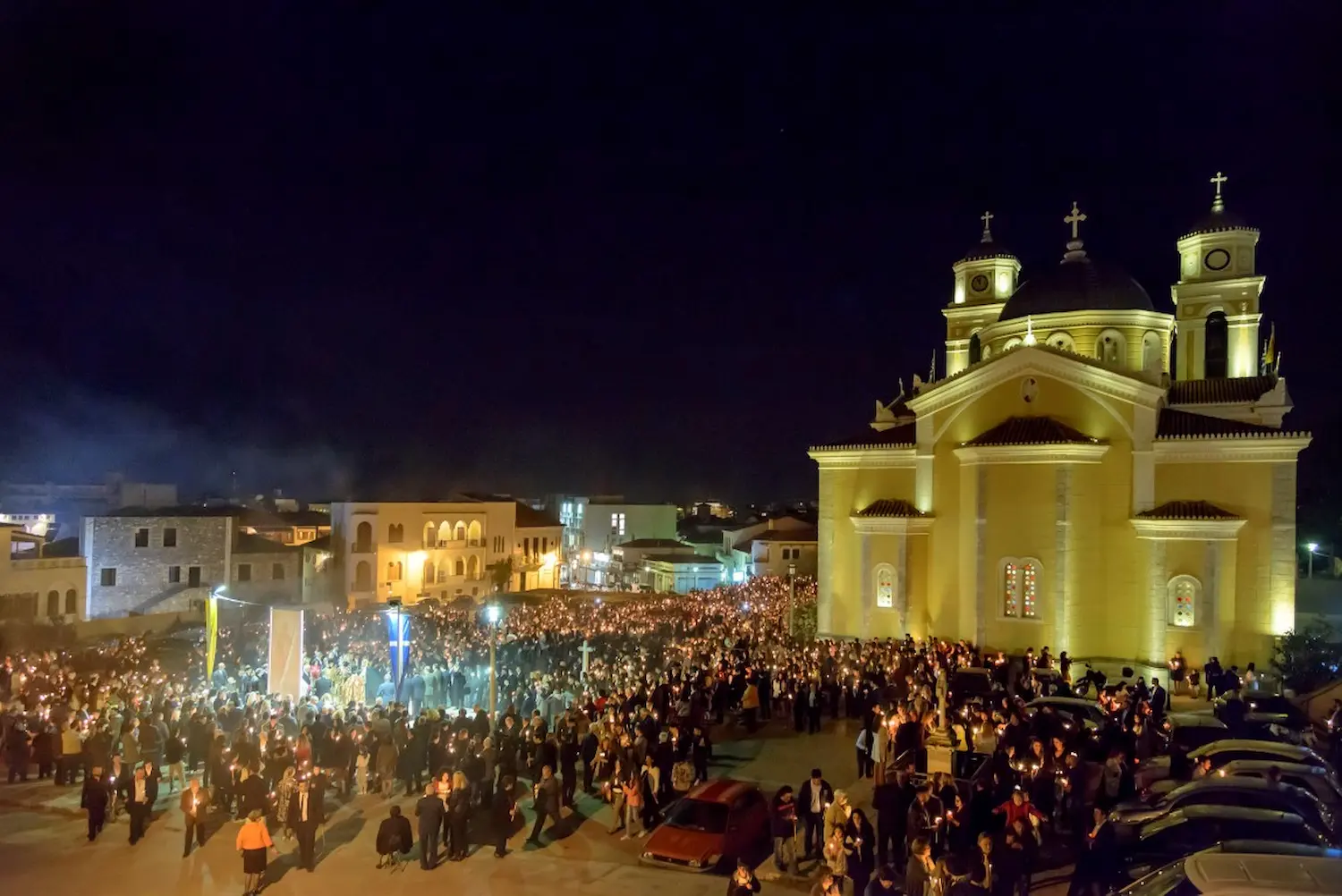
Easter in Kalamata is a ritual that unites the city. These are the days when the “Urban Riviera” slows down, neighborhoods fill with aromas, and people open their homes. If you want to feel the city’s pulse, follow this calendar for an authentic Easter in Kalamata.
In this guide, you’ll discover how Easter in Kalamata is celebrated — from the Epitaphios processions to the Saitopolemos. With practical information, insider tips, and all the customs to experience it like a local.
📋 In this article:
Good Friday | Holy Saturday | Easter Sunday | Saitopolemos | Insider Tips | FAQ
Good Friday: The City in the Glow of Candles
On the evening of Good Friday, the atmosphere in Kalamata is unique. The Epitaphios (ornate biers) from every church take to the streets, and the city is immersed in reverence — one of the most moving moments of Easter in Kalamata.
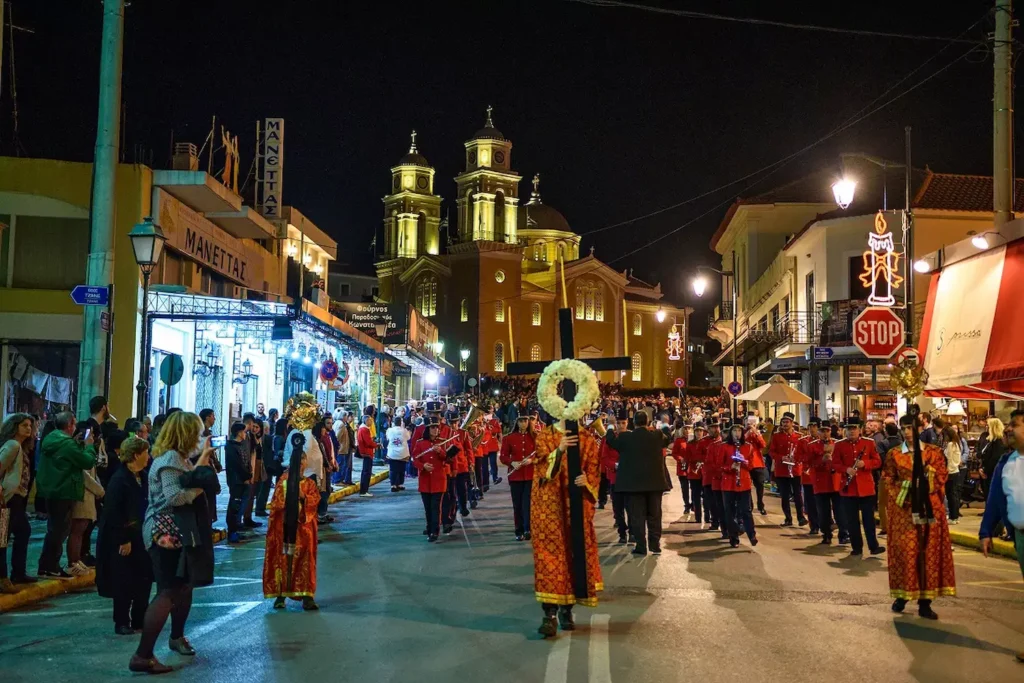
- The Ideal Spot: Although every neighborhood has its charm, the Historic Center is the heart of the events. 👉 Kalamata Historic Center: Castle & Old Town Walking Guide
- Insider Tip: Look for the spot where three Epitaphioi meet in the narrow streets. It’s the moment when the chanting and the crowd’s silence create an experience you’ll remember forever.
- Best Time: 20:00-23:00 — most Epitaphioi come out after 8 PM.
- Tip: Wear comfortable shoes — you’ll walk a lot on the cobblestone alleys.
Holy Saturday: The Holy Light & the Blessing of the Home
On the evening of the Resurrection, the city “beats” in the churchyards — the most reverent moment of Easter in Kalamata.
- The Ceremony: Everyone waits with their candles and lamps to receive the Holy Light. Returning home is our own, family ritual. According to custom, the first person to enter the house forms a cross with the smoked flame above the door, blessing the home for the new year.
- The Table: After church, the fast is broken with traditional magiritsa (the classic tripe soup) and red eggs. It’s the dinner that prepares the stomach for what follows the next day. 👉 Kalamata Food Guide: A Local’s Gastronomic Map
- Best Time: 23:00-01:00 — the Resurrection usually happens around midnight.
- Tip: If you haven’t received an invitation from locals, many churches in the center have open celebrations after the Resurrection.
Easter Sunday: Smoke, Dance & Saitopolemos
On Sunday, Kalamata transforms into one endless outdoor celebration — the happiest day of Easter in Kalamata.
The Courtyard Celebration
- The Setting: In every home courtyard and open space, families and large groups gather early.
- The Food: Lamb or goat on the spit and kontosouvli take center stage. Traditional songs are heard everywhere, while feasting and dancing last until the afternoon.
- Best Time: 11:00-17:00 — the celebration starts after church and lasts until late afternoon.
- Tip: If you’re walking through neighborhoods on Sunday, don’t be surprised if someone offers you a meze or wine — that’s Easter in Kalamata!
The Saitopolemos (The Explosive Finale)
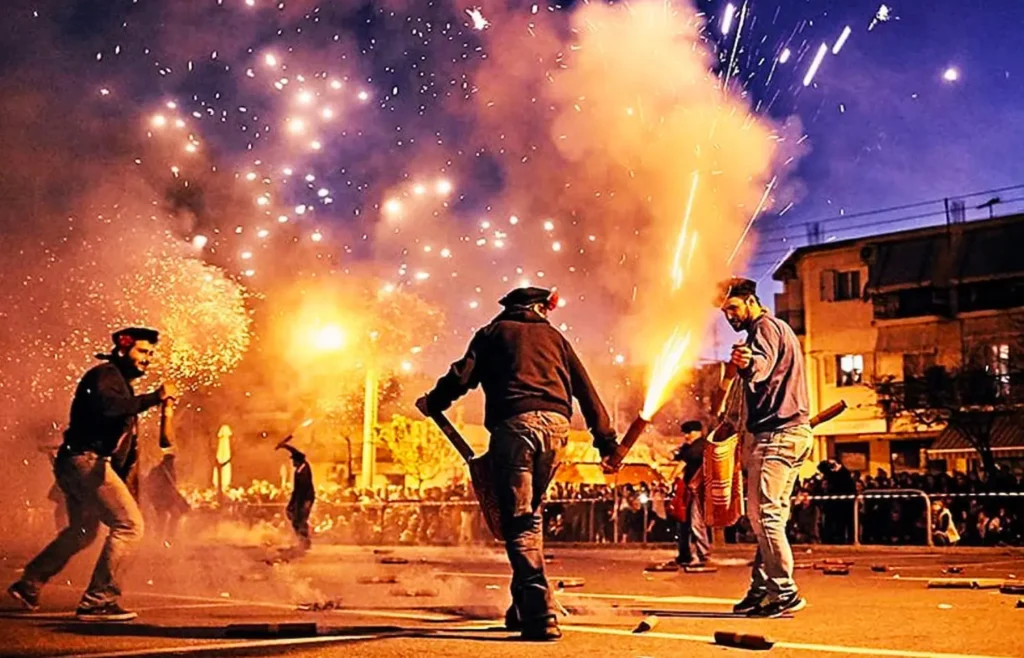
- The Custom: In the afternoon, the action moves to the Tenta stadium. The Saitopolemos is a tradition dating back to the 1821 Revolution — the most impressive Easter custom in Kalamata.
- The Action: The “bouloukia” (groups) ignite their handmade saites (rockets), creating a deafening roar and a cloud of smoke that symbolizes the fervor of the fighters. It’s a wild, impressive spectacle absolutely identified with the city.
- Location: Tenta Stadium (near the center, 10′ walk from the square).
- Best Time: 17:00-19:00 — arrive 30 minutes early to find a good spot.
- Tip: Bring earplugs if you have sensitive hearing — the noise is intense!
Insider’s Tips for Easter in Kalamata
- Safety at Saitopolemos: Don’t try to be “heroes” for a photo. Stay strictly behind the protective barriers. The Saitopolemos demands respect and distance.
- Magiritsa: If you’re not fond of offal, inform them in advance! Many now make alternatives (like mushroom soup), but the “hardcore” tripe soup remains the king.
- Hospitality: Don’t be surprised if, while walking through a neighborhood on Sunday, someone offers you a meze or a glass of wine. That’s Easter in Kalamata — open homes and open hearts!
- Reservation: If you want to eat at a taverna on Sunday, book weeks in advance — they fill up fast.
- Getting Around: The center will be closed to traffic on Saturday night and Sunday. Park outside the center and walk. 👉 Kalamata Travel Guide: Practical Survival Tips
- Explore: If you have time, combine Easter with a trip to Mani — just 30′ from Kalamata. 👉 One Day in Messinian Mani: The Perfect Road Trip Itinerary
❓ Frequently Asked Questions (FAQ)
- When is Easter in Kalamata? Easter follows the Orthodox calendar — usually April or early May. Check the dates for 2026.
- Are shops open during Easter? Good Friday: closed from noon. Holy Saturday: open morning, closed afternoon. Easter Sunday & Monday: closed (except restaurants/cafés).
- Can I watch the Saitopolemos? Yes! It’s open to everyone. Arrive early (16:30) for a good spot and stay behind the barriers.
- Do I need a reservation for food? Yes! Restaurants fill up weeks in advance. Book at least 2-3 weeks ahead.
- Is it suitable for families? Yes! Easter in Kalamata is a family celebration. The Saitopolemos may frighten small children due to the noise.
- Where should I stay for Easter? Choose accommodation in the center or near the beach for easy access. 👉 Where to Stay in Kalamata: Area-by-Area Guide
Combine Your Visit
If you’re planning to visit Kalamata for Easter, also see:
- 👉Active Kalamata: 10 Adrenaline Experiences You Must Try
- 👉 Kalamata: The Ideal 365-Day-a-Year Destination
- 👉 The Beaches of Kalamata: A Local’s Insider Guide
- 👉 Where to Stay in Kalamata: Area-by-Area Guide
- 👉 Official Kalamata Tourism Guide
💬 Have you experienced Easter in Kalamata? Share your experience in the comments! 👇