

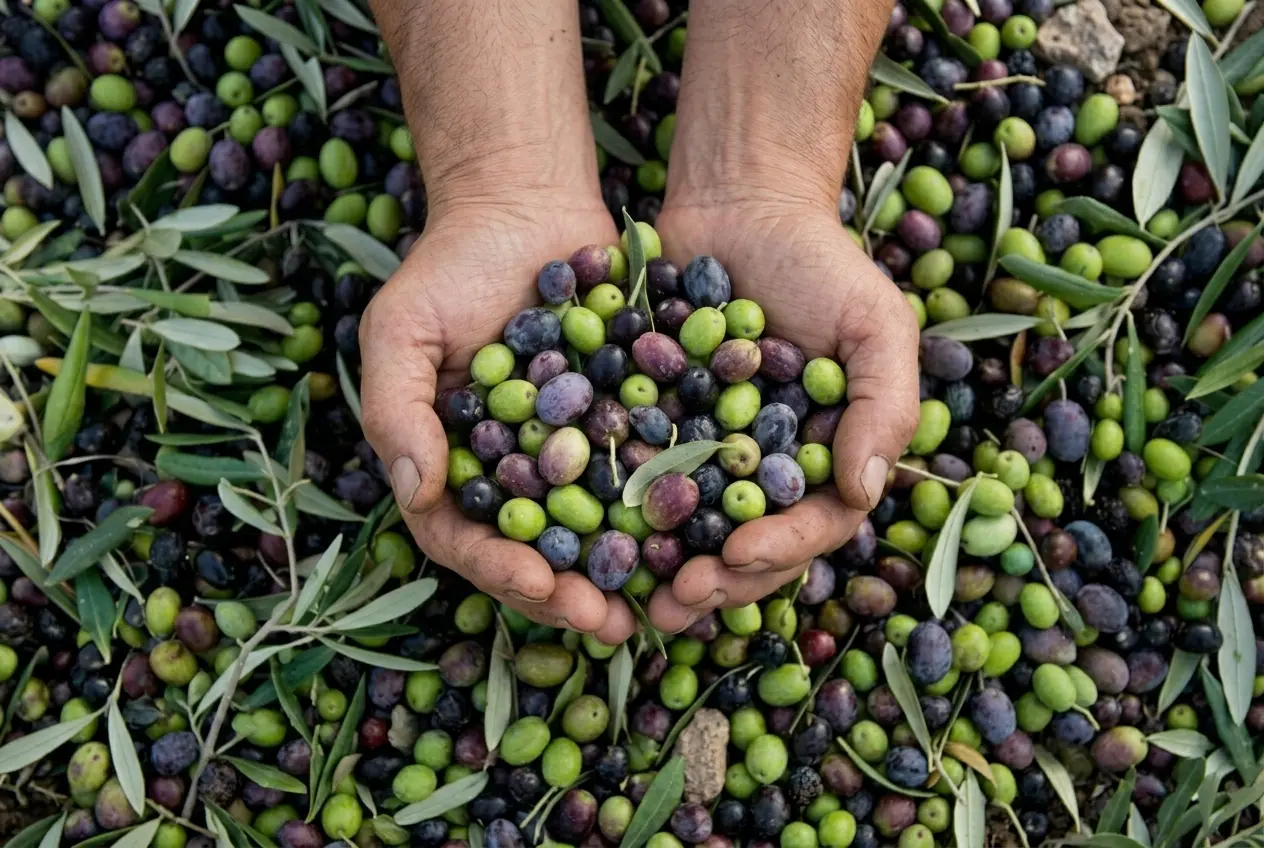

1. What is the “Eleomazoma”?
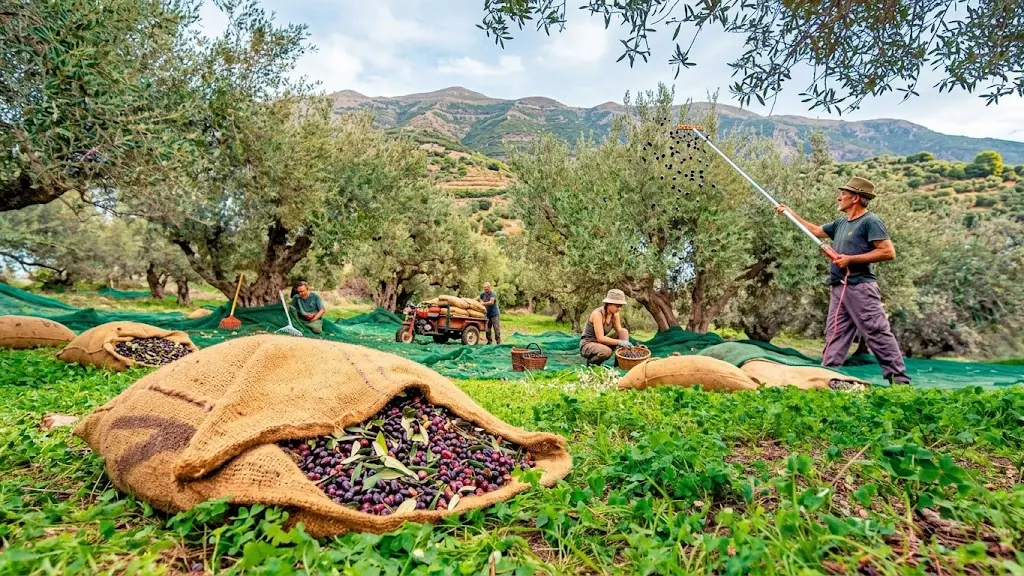
The Eleomazoma is the annual olive harvest — but in Messinia, it is far more than just agricultural work. It is a ritual that has been repeated for 3,000 years, from ancient Messene to this day.
For generations, entire families would return to their ancestral villages to pick the olives by hand, spread their nets under the centuries-old trees, and take the day’s yield to the local elaiotriveio (traditional olive mill).
While modern mechanization has made the process faster, the spirit remains the same: it is a time of community, hard work, and immense pride. The air in Messinia during this period is filled with the intoxicating, peppery aroma of freshly crushed olives. A sensory experience you won’t find anywhere else in the world.
2. The Koroneiki variety — why Messinia is unique
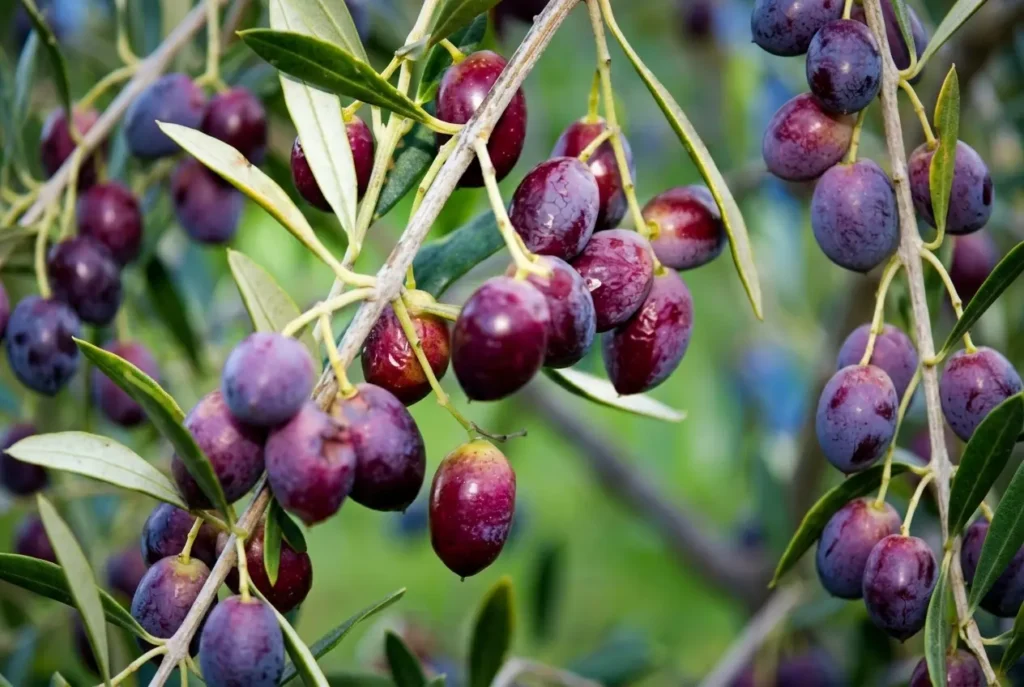
Before we talk about the experience, you need to understand why Messinian olive oil is considered among the best in the world. The secret lies in a small, humble tree: the Koroneiki olive.
This variety, named after the ancient city of Koroni in southern Messinia, has been adapted to the Mediterranean climate for millennia. The trees are small, drought-resistant, and produce a small, hard fruit with an exceptionally high oil content.
-
What makes Messinian oil unique?
- Intense green color: A sign of high chlorophyll and freshness.
- Fruity aroma: Reminiscent of freshly cut grass, green tomato, artichoke.
- Intense peppery finish: A sign of high polyphenol content (powerful antioxidants that protect health).
- Low acidity: Under 0.3% in the best samples, well below the 0.8% threshold for “extra virgin.”
Local Tip: When tasting fresh oil, pay attention to the burn at the back of your throat. It’s not a flaw — it’s a sign of quality. Locals say it “grabs you” and consider it the highest compliment to the producer.
3. Three ways to experience it
Depending on your energy level and interests, here’s how you can participate:
3.1. The Observer: Visit a Traditional Olive Mill (Elaiotriveio)
You don’t need to pick olives to feel the magic. Simply visiting a local olive mill during operation is mesmerizing.
- What you’ll see: The deafening, rhythmic sound of the machines, the steam rising from the crushed olive paste, and that unforgettable, fresh, grassy aroma filling the air.
- What to do: Many small, family-run mills welcome visitors. Politely ask if you can watch the process. Often, the owners are incredibly proud and will offer you a spoonful of agourelaio (the first, unfiltered oil of the season) to taste with a piece of rustic bread.
3.2. The Visitor: Guided Tour & Olive Mill Tasting
Since manual olive picking is rarely offered to tourists (due to safety concerns and protection of the centuries-old trees), the ultimate authentic experience is visiting an olive mill during operation in an organized way.
- What you’ll experience: A walk through the groves with a local guide, learning about the varieties, and a professional tasting session.

- Real Recommendations:
- The Olive Routes (Androusa): An exceptionally organized tour program starting from the Castle of Androusa, with a visit to the olive mill.
- Olive Oil Tour & Tasting (Kalamata): Available organized tours combining a grove walk with a traditional lunch.
- 👉 [Check availability for Olive Oil Tours & Tastings in Messinia]
3.3. The Connoisseur: Tasting & Direct Purchase
Skip the supermarket and go straight to the source.
- What to do: Visit local producers or specialized olive oil shops in Kalamata (especially at the Central Market) or in the villages of Messinian Mani. Ask for a tasting.
- What to look for: A good Messinian extra virgin olive oil should smell like freshly cut grass, leave a pleasant, peppery burn at the back of your throat, and have an intense green-gold color.
5. Food Pairing — how to taste the fresh oil
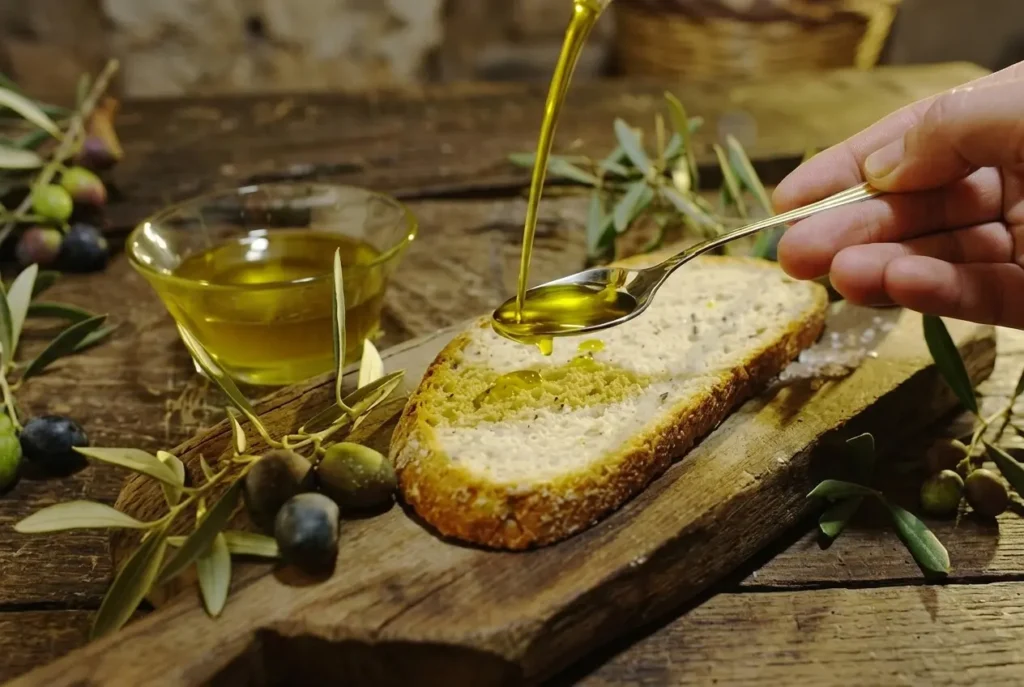
Fresh Messinian oil is not just an ingredient — it’s the protagonist of the dish. Here’s how to enjoy it like a local:
- With rustic bread: The most classic tasting. Dip fresh, warm bread in agourelaio with a pinch of salt.
- On a salad: Pour it raw over tomatoes, cucumbers, or a simple green salad. You’ll discover flavors you didn’t know existed.
- With syglino: The traditional Messinian cured meat pairs perfectly with the peppery oil.
- In cooked food: Add it at the end, raw, over soups, legumes, or roasted vegetables. The heat will release the aromas.
- With cheese: Try it with local feta, graviera, or the rare Messinian cheese “sfela.”
Local Tip: If you’re at a tavern in October-November, ask if they cook with the first oil of the season. If yes, it’s literally gastronomic gold. 👉 [Read our full Food Guide]


